Park, Mei Lin

Inmate ID: #MX582894
Classification: Military
Appalachian Detention Complex

Inmate Status
Demographic Data
First Name Mei
Middle Name Lin
Last Name Park
Date of Birth 2006-09-14
Age 20 Years
Birthplace Michigan, USA
Race / Ethnicity Asian
Gender Female
Height 5'8"
Weight 112
Eye Color Brown
Convictions / Penalties
Code Offense Penalty Details Date Sentenced
Count #1
29-UD0TQK
Wartime Treason Death Penalty
Decapitation
No Date Scheduled
2025-11-21
Age at sentencing: 19
Count #2
37-SQD8F0
Conspiracy Against National Security Life Imprisonment (without parole)
Term of natural life
2025-11-21
Age at sentencing: 19
Count #3
78-PNU38V
Unauthorized Acquisition and Distribution of Classified Information Incarceration
25 Years
Consecutive
2025-11-21
Age at sentencing: 19
Count #4
21-ECTPZL
Conspiracy to Obstruct a Federal Investigation Incarceration
10 Years
Consecutive
2025-11-21
Age at sentencing: 19
  • Wartime Treason
    Count #1
    Code: 29-UD0TQK
    2025-11-21
    Age at sentencing: 19
    Death Penalty
    Decapitation
    No Date Scheduled
  • Conspiracy Against National Security
    Count #2
    Code: 37-SQD8F0
    2025-11-21
    Age at sentencing: 19
    Life Imprisonment (without parole)
    Term of natural life
  • Unauthorized Acquisition and Distribution of Classified Information
    Count #3
    Code: 78-PNU38V
    2025-11-21
    Age at sentencing: 19
    Incarceration
    25 Years
    Consecutive
  • Conspiracy to Obstruct a Federal Investigation
    Count #4
    Code: 21-ECTPZL
    2025-11-21
    Age at sentencing: 19
    Incarceration
    10 Years
    Consecutive
Case Files:

No public case files mapped to this archive profile.

Summary

Mei Lin Park is a Korean-American former university student who was convicted of capital offenses under the Wartime National Security Act following her involvement in the Students for Peace and Accountability (SPA), a student-led anti-war organization at Eastbridge University. Born in Ann Arbor, Michigan, Park was raised in a Korean-American family. She enrolled at Eastbridge University in August 2024, majoring in Political Science with a minor in Computer Science. Before her arrest, she was described as academically accomplished, politically outspoken, and generally reserved. In February 2025, following the federal government's announcement of Operation Iron Horizon and an expanded military assistance package to a foreign government involved in an ongoing war, Park became involved in SPA. She subsequently became one of the organization's co-founders, working alongside Elizabeth Claire Morgan, a fellow university student majoring in Journalism who served as SPA's Communications Director. In March 2025, Park and several other SPA members established an anonymous publication titled The February Letters. The publication distributed political essays, investigative reports, and materials questioning the government's military policy. Park primarily contributed political essays and commentary under the pseudonym "Winter Sparrow," while Morgan was responsible for editing, communications, and publication distribution. On May 19, 2025, Park participated in a large anti-war demonstration outside the administration building of Eastbridge University. The demonstration attracted approximately 2,000 participants. At approximately 3:40 PM, federal and local law enforcement officers intervened to arrest individuals suspected of involvement in the unauthorized acquisition and distribution of classified military documents. Park was arrested at the demonstration site alongside Elizabeth Claire Morgan, in front of fellow protesters and members of the press. Footage of both students being taken into custody subsequently circulated widely on social media and attracted national and international attention. Their arrests became a defining event in the public controversy surrounding SPA. Park's arrest was connected to an investigation into an alleged conspiracy involving the acquisition and distribution of classified military information. Prosecutors subsequently alleged that Park had knowingly participated in the conspiracy and assisted in concealing evidence. Park denied intending to assist a foreign adversary and maintained that her activities were motivated by opposition to the government's military policy. Park's federal capital trial commenced on October 6, 2025. Elizabeth Claire Morgan was prosecuted alongside her as a co-defendant. The prosecution argued that Park's activities extended beyond protected political expression and constituted participation in a wartime national-security conspiracy. The defense disputed the allegations, arguing that Park's political publications and peaceful demonstrations had been improperly conflated with the criminal conduct of other individuals. On November 21, 2025, Park was convicted of the capital offenses and sentenced to death. Morgan was also convicted and sentenced to death on the same day. Park's final statement in court received widespread media attention: "I never wanted to destroy my country. I wanted my country to remember what it stood for." Later that day, Park was transferred to Appalachian Detention Complex and assigned to Death Row, Unit D, Cell D-12. Her co-defendant, Elizabeth Claire Morgan, was transferred to the same facility on the same date and assigned to Unit D, Cell D-13. Throughout 2026, Park's legal team pursued appellate and post-conviction remedies. Her direct appeal was rejected on April 28, 2026. The Supreme Court declined to hear her case on July 16, 2026, and her post-conviction petition was denied on September 3, 2026. Park remains incarcerated at Appalachian Detention Complex under a capital sentence. All ordinary appeals and clemency proceedings have been exhausted. She continues to receive correspondence and occasional family visits. She has maintained a relatively quiet institutional record and spends much of her time reading, writing letters, and maintaining a personal journal. Park's case remains controversial, with supporters maintaining that her prosecution was politically motivated and that her death sentence was disproportionate to her actual involvement. Her case remains closely associated with that of her co-defendant and fellow SPA co-founder, Elizabeth Claire Morgan.

News Articles / Stories
Article Thumbnail
Park and Morgan Sentenced to Death; Transferred to Appalachian Detention Complex

Nov 22, 2025 • THE NATIONAL LEDGER
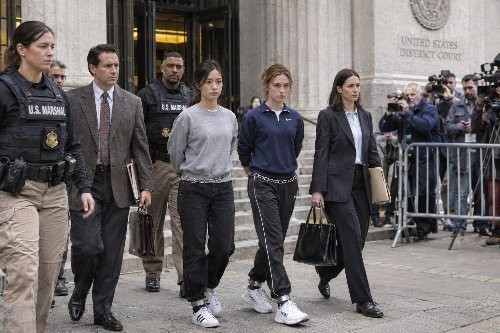
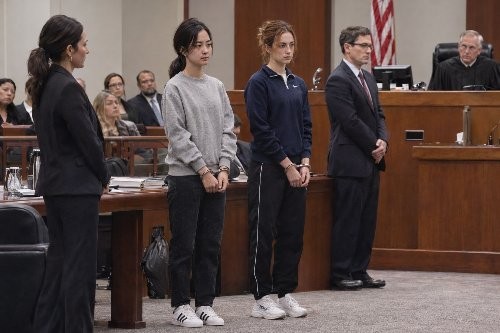
Mei Lin Park and Elizabeth Claire Morgan convicted under Wartime National Security Act; judge cites alleged participation in classified-information conspiracy as prosecution of anti-war student organization reaches its conclusionEASTBRIDGE — Two former Eastbridge University students were sentenced to death Friday after a federal jury convicted them of wartime treason and related national-security offenses, concluding a closely watched capital trial that has become one of the most contentious prosecutions of the government's wartime crackdown on anti-war activism.Mei Lin Park, 19, and Elizabeth Claire Morgan, 20, co-founders of the student organization Students for Peace and Accountability (SPA), were convicted of wartime treason following a seven-week federal trial. Both women received death sentences under the Wartime National Security Act, with the court designating decapitation as their method of execution under the applicable federal and Appalachian Detention Complex regulations.The verdicts, delivered in federal court on November 21, followed months of public controversy surrounding the women's arrests, their publication of anti-war political material, and allegations that SPA members had participated in an organized effort to acquire and distribute classified military information.The court imposed additional sentences of life imprisonment without the possibility of parole for conspiracy against national security, 25 years' imprisonment for unauthorized acquisition and distribution of classified information, and 10 years for conspiracy to obstruct a federal investigation. Those sentences were imposed alongside the capital sentences.Park, a Korean-American former political science student who also studied computer science, and Morgan, a former journalism student and SPA communications director, were prosecuted together after their arrests at an Eastbridge University demonstration on May 19.The two women stood beside one another in court as the verdicts and sentences were formally announced. Both appeared subdued, maintaining restrained expressions as the proceedings concluded.Prosecutors argued that the women's involvement in SPA extended substantially beyond political opposition to government policy. Established in early 2025 following the announcement of Operation Iron Horizon and an expanded military assistance package to a foreign government involved in an ongoing war, SPA initially organized demonstrations, published political commentary, and coordinated student opposition to the administration's military policy.Park emerged as one of the organization's principal political writers. Under the pseudonym "Winter Sparrow," she contributed essays and commentary to an anonymous publication called The February Letters, established in March 2025. Morgan served as the organization's Communications Director, overseeing publication editing, press relations, social media distribution, and documentary photography at demonstrations.The prosecution maintained that their responsibilities placed them within a broader conspiracy involving the unauthorized acquisition and dissemination of classified military documents. Prosecutors alleged that Park knowingly participated in the conspiracy and helped conceal evidence, while Morgan knowingly facilitated the distribution of classified materials through SPA's publication network.The defense challenged that interpretation, arguing that the government had improperly conflated political expression, journalism, and peaceful protest with criminal participation in an unlawful conspiracy. Park denied intending to assist a foreign adversary, while Morgan's attorneys maintained that her work was primarily journalistic and administrative and that she had not knowingly participated in the acquisition of classified information.The demonstration that preceded their arrests took place outside Eastbridge University's administration building on May 19. Approximately 2,000 people attended. At around 3:40 p.m., federal and local law enforcement officers moved into the demonstration area to detain individuals suspected of involvement in the classified-information investigation.Park and Morgan were arrested at the scene, in front of fellow demonstrators and members of the press. Morgan was reportedly carrying organizational documents and a press camera. Video showing the two students being taken into custody subsequently circulated widely online, turning their arrests into a defining moment in the national controversy surrounding SPA.In explaining the capital sentences, the court distinguished the defendants' alleged conduct from the political activities that had initially brought them public attention. The judge emphasized that the convictions rested on the jury's findings concerning wartime treason and the defendants' alleged knowing participation in a national-security conspiracy, rather than their opposition to military policy or their attendance at demonstrations alone.The court cited the seriousness of the classified military information involved, the alleged coordinated nature of the offenses, and the defendants' respective responsibilities within the organization as aggravating considerations. It concluded that the offenses, as established at trial, met the statutory threshold for capital punishment under the Wartime National Security Act.The court nevertheless acknowledged the defense arguments concerning the distinction between journalism and criminal conduct, but found that the prosecution had established participation beyond the limits of protected political activity.A separate determination concerned the method of execution. Under the applicable regulations, Appalachian Detention Complex (ADC) recognizes three authorized methods: decapitation, firing squad, and lethal injection. The sentencing orders designated decapitation for both defendants.In its explanation, the court gave primary consideration to the institutional assessment of the offenses and the applicable sentencing framework. The judgments characterized the convictions as particularly serious wartime treason offenses involving an alleged coordinated threat to national security. The court stated that the selected method was consistent with the gravity of the capital convictions and the established execution provisions applicable to ADC.ADC's longstanding institutional preference for decapitation among its authorized methods was also noted as a secondary administrative consideration. The court further directed that the two cases be administered under the same execution-method classification.The decisions made Park and Morgan among the most prominent defendants sentenced under the Wartime National Security Act since the introduction of Operation Iron Horizon.Following the announcement of the sentences, Park was permitted to address the court. Her final statement was delivered in a measured voice, with little visible emotion. She spoke about her understanding of patriotism and the reasons she had become involved in the anti-war movement."I never wanted to destroy my country. I wanted my country to remember what it stood for."The statement was subsequently repeated by reporters and circulated widely across social media. Supporters of Park interpreted it as a final expression of political conviction, while critics viewed it as an inadequate response to the seriousness of the offenses for which she had been convicted.Later Friday, both women were escorted from the courthouse under federal custody. Security personnel accompanied them through the courthouse exit before their transfer to the Appalachian Detention Complex, a maximum-security correctional institution responsible for housing inmates under capital sentences.The transfer took place under heightened security arrangements. Park and Morgan remained in the civilian clothing they had worn during the sentencing proceedings. Their departure marked the end of their public court appearances and the beginning of their confinement on the institution's death row.The transport vehicle arrived at ADC later that afternoon. Both women were escorted through the institution's secure receiving entrance by correctional officers before being processed separately through death-row intake.Their admission records were completed individually, including identity verification, institutional photographs, medical screening, personal property documentation, and housing assignments. Park was assigned to Death Row, Unit D, Cell D-12, while Morgan was assigned to the adjacent Cell D-13.Under ADC's Death Row Personal Clothing and Attire Policy, each inmate must select one approved personal clothing style immediately after sentencing. The selection cannot subsequently be changed and remains the inmate's designated attire throughout incarceration and at execution. Park selected a light gray collarless crewneck sweatshirt, black straight-leg trousers, and white Adidas Superstar sneakers; Morgan selected a burgundy-red collarless crewneck sweatshirt, gray straight-leg sweatpants, and white Hoka running shoes. Both selections were approved by prison administrators and comply with the additional collarless-clothing requirements for inmates assigned to decapitation. ADC provides identical replacement sets to maintain each inmate's approved appearance.The two women's individual intake photographs documented their approved clothing selections, identifying information, and initial death-row classification.By Friday evening, both women had completed the initial intake procedures and entered their assigned cells.The convictions have generated sharply divided reactions. Supporters of the defendants argue that the case represents an extraordinary expansion of wartime national-security powers into the activities of student journalists and political organizations. They maintain that the death sentences are disproportionate and that the government's treatment of SPA has created a troubling precedent for political expression during wartime.Others have defended the prosecution, arguing that national security and the protection of classified military information require accountability when individuals knowingly participate in unlawful distribution networks.For Eastbridge University, the outcome marks a difficult conclusion to a controversy that began with student demonstrations and developed into a major federal criminal case. The university has faced sustained public scrutiny over the arrests of two former students, their subsequent prosecution, and the consequences for student political activity.Park and Morgan entered ADC as co-defendants whose cases had become closely intertwined in the national debate. They now face separate confinement assignments under the same capital sentence and the same designated execution method.As of Saturday morning, November 22, both remained incarcerated in Death Row Unit, at Appalachian Detention Complex. Their transfer and intake procedures had been completed, and the institution had formally recorded their individual housing and approved personal clothing selections.The verdicts have closed the trial, but the political and legal controversy surrounding the prosecution of SPA is far from settled.
Article Thumbnail
The Stakes at Eastbridge: Park and Morgan Face a Capital Trial Over Classified Military Information

Oct 27, 2025 • THE NATIONAL LEDGER
EASTBRIDGE — Nearly five months after their arrests at a major anti-war demonstration, former Eastbridge University students Mei Lin Park and Elizabeth Claire Morgan are preparing to face a federal capital trial over their alleged involvement in the acquisition and distribution of classified military information. The case, which has drawn national attention to the boundaries between political activism, student journalism and national security law, is expected to place the activities of the Student Peace Alliance (SPA) under intense scrutiny.Park and Morgan were arrested on May 19, 2025, during a demonstration outside Eastbridge University's administration building that attracted approximately 2,000 participants. Federal and local law enforcement officers moved into the crowd at around 3:40 p.m., detaining individuals suspected of involvement in the unauthorized acquisition and distribution of classified military documents. Park and Morgan, both prominent figures in SPA, were taken into custody together. Images and video of their arrests circulated widely, making the two students central figures in a case that has since become a major national security prosecution.According to the prosecution's allegations, the defendants participated in a broader conspiracy involving classified military information. Prosecutors contend that the materials were not merely discussed as part of public political debate, but were knowingly acquired, handled and distributed through an organized effort. The government is expected to argue that Park and Morgan understood the sensitive nature of the information and played complementary roles in advancing the organization's activities.The prosecution has drawn particular attention to the defendants' respective responsibilities within SPA. Park was primarily associated with the organization's political writing and ideological direction. Her essays and commentary helped shape its opposition to government military policy and its public arguments concerning the ongoing war. Morgan, by contrast, served as SPA's Communications Director and was responsible for press statements, social media publications, demonstration photography and the organization's student publication, The February Letters. Investigators and prosecutors have placed particular emphasis on the publication's role in circulating material connected to the case.The defense is expected to challenge the government's interpretation of those activities. Park has maintained that her political work was motivated by opposition to military policy, not by an intention to assist a foreign adversary. Her defense is expected to distinguish political advocacy and the expression of dissenting views from participation in an unlawful conspiracy. Morgan's defense, meanwhile, is expected to emphasize her background as a journalism student and her responsibilities as a communications organizer. Her attorneys have argued that documenting demonstrations, editing publications and communicating political arguments do not, in themselves, establish knowledge of or participation in the unlawful acquisition of classified information.The distinction between the two women's roles may become an important issue during the proceedings. Although they were charged in the same case, their responsibilities within SPA were not identical. The prosecution's theory rests in part on the allegation that their activities complemented one another, while the defense is likely to argue that the same division of responsibilities reflects different forms of student activism and publication work rather than a coordinated criminal enterprise.The charges carry extraordinary potential consequences. If convicted of the capital offenses under the Wartime National Security Act, Park and Morgan could face the highest penalty permitted under the law: death. The possibility of capital punishment places the proceedings among the most consequential federal cases involving student political activity and classified military information in recent years. Any sentence, however, would depend on the offenses established at trial and the subsequent legal proceedings.For Eastbridge University, the case has become an unsettling episode in the institution's recent history. The arrests transformed two student organizers, previously known within campus political circles for their anti-war advocacy and publication work, into defendants in a federal national security prosecution. Their supporters have described the case as a test of the government's treatment of political dissent and student journalism. Critics of SPA, meanwhile, argue that political motivation cannot excuse the unauthorized handling or distribution of classified information.The proceedings are also expected to raise broader questions about the responsibilities of student organizations when dealing with sensitive government materials. At the center of the dispute is not simply what Park and Morgan believed about the government's military policy, but what they knew about the information involved, how it was obtained and whether their individual actions crossed the legal boundary between protected expression and criminal conduct.As the trial approaches, neither the prosecution's allegations nor the defendants' accounts have been established as fact in court. Park and Morgan remain presumed innocent unless and until proven guilty. The coming proceedings will determine whether the government can substantiate its claims and whether the two former students' roles in SPA amount to the capital offenses charged against them.For now, the case remains unresolved. Its outcome could have profound consequences for Park and Morgan, as well as for the wider debate over national security, political dissent and the limits of student journalism.
Article Thumbnail
Two SPA Co-Founders Arrested at Major Anti-War Demonstration as Federal Investigation Intensifies

May 20, 2025 • THE NATIONAL LEDGER

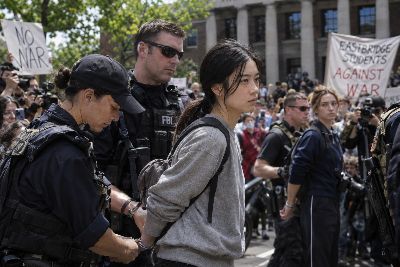
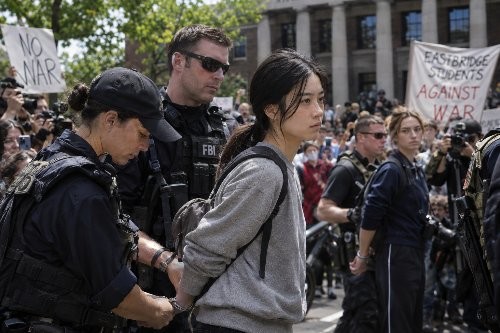
Mei Lin Park and Elizabeth Claire Morgan were taken into custody before thousands of demonstrators Monday. Their arrests, captured on video and circulated widely online, have become the latest flashpoint in a growing national controversy over classified military information and political dissent.EASTBRIDGE — Two prominent student organizers and co-founders of the Student Peace Alliance (SPA), Mei Lin Park and Elizabeth Claire Morgan, were arrested Monday afternoon during a major anti-war demonstration outside the administration building of Eastbridge University, in an operation involving federal and local law enforcement officers.The arrests, which took place at approximately 3:40 p.m. on May 19, unfolded in front of an estimated 2,000 demonstrators, university affiliates and members of the press. Video footage showing the two women being taken into custody quickly circulated across social media platforms, drawing national and international attention and intensifying an already contentious debate over the government's investigation into the alleged unauthorized acquisition and distribution of classified military documents.Park and Morgan were among the most recognizable figures in the student-led opposition movement. As co-founders of SPA, the two had become increasingly prominent in organizing demonstrations and coordinating student opposition to the government's military policy. Their detention marks a significant escalation in a controversy that has placed questions of national security, political activism and the limits of dissent at the center of public debate.A demonstration overshadowed by arrestsMonday's demonstration began as a large gathering of students, faculty members and other participants outside the university's administration building. Protesters carried handmade signs and banners calling for an end to military operations and greater transparency concerning classified military activities.Park and Morgan were present among the demonstrators throughout the afternoon. Park was photographed addressing participants through a handheld megaphone, while Morgan, who was carrying a press camera and organizational documents, documented the gathering and its participants.The atmosphere changed shortly before 4 p.m., when federal and local officers moved into the demonstration area to take individuals suspected of involvement in the classified-information investigation into custody.Witnesses described a sudden law enforcement presence amid a crowd that had gathered around the university building. Demonstrators raised their phones to record the intervention, while journalists moved closer to document the arrests.Morgan was among those taken into custody. Park was arrested alongside her, with officers restraining and escorting the two women away from the demonstration site.Neither woman was reported to have engaged in a violent confrontation during the arrests. Their expressions appeared subdued in footage subsequently circulated online, as officers escorted them through the gathering crowd.The images quickly became among the most widely shared visual records of the demonstration, transforming what had been a university protest into a national news story.A federal investigation with far-reaching implicationsThe arrests are connected to an investigation into an alleged conspiracy involving the acquisition and distribution of classified military information.Prosecutors allege that Park knowingly participated in the conspiracy and assisted in concealing evidence connected to the activities under investigation. The allegations have not been independently established in court.Park has denied intending to assist a foreign adversary. She has maintained that her activities were motivated by opposition to the government's military policy rather than an effort to compromise national security.Morgan's alleged involvement is also under investigation. At the time of her arrest, she was reportedly carrying organizational documents and a press camera. Her position within SPA and her activities surrounding the demonstration have drawn additional scrutiny from investigators.The precise extent of each woman's alleged involvement, and the evidence supporting the government's investigation, remain subjects of considerable public interest.The case has raised difficult questions about the distinction between political advocacy and conduct that prosecutors contend may constitute a national security offense. Civil liberties advocates and supporters of the student movement have expressed concern about the implications of the arrests for university activism and the treatment of individuals involved in controversial political movements.Transfer to Appalachian Detention ComplexFollowing their arrests, Park and Morgan were transported to Appalachian Detention Complex (ADC), where they underwent initial booking and intake procedures.The two women arrived at the facility later Monday. They were photographed being escorted from a secure transport vehicle through the detention complex's vehicle entrance by uniformed officers.Both were subsequently processed and issued the facility's standard orange detention uniforms. Their intake photographs recorded their identities and physical appearance as part of the facility's booking procedures.After processing, the women were transferred into the detention complex's secure housing area. They were escorted through an institutional corridor under correctional supervision, with their assigned housing locations identified by the facility's internal numbering system.The transfer marked a stark change from the crowded university plaza where they had been arrested only hours earlier. Instead of demonstrators and press photographers, the women were now surrounded by reinforced cell doors, security cameras and the controlled environment of a federal detention facility.Their first night in custodyBy Monday evening, Park and Morgan had completed their initial intake procedures and had been placed in detention housing.Photographs from inside the facility show Park sitting on the edge of an institutional bunk in her orange uniform. The cell contains a fixed metal bed, a stainless-steel sink and toilet, and otherwise sparse furnishings typical of a secure detention environment.Morgan was also photographed inside an individual cell, seated on her bunk in the same orange institutional clothing issued during intake.The images offer a striking contrast to the scenes outside Eastbridge University earlier that afternoon. Within several hours, two student organizers who had been addressing crowds and documenting a political demonstration had entered the tightly controlled routine of detention.Their immediate legal circumstances and the next steps in the federal investigation remain matters of significant public interest.A controversy far from settledThe arrests of Park and Morgan are likely to intensify the national debate surrounding SPA and the government's handling of the classified-information investigation.For supporters of the organization, the detention of its two co-founders represents a troubling development in the relationship between political opposition and federal law enforcement. For those emphasizing the seriousness of the underlying allegations, the investigation raises questions about the responsibilities of individuals who may have had access to sensitive military information.The scale of Monday's demonstration, the public nature of the arrests and the rapid circulation of the footage have ensured that the case will not remain confined to the university community.Eastbridge University, the federal authorities involved in the investigation and representatives of SPA now face growing public attention as the case develops.What began as a demonstration against the government's military policy has become a defining moment in the controversy surrounding the Student Peace Alliance.By Tuesday morning, Park and Morgan were no longer standing before thousands of demonstrators outside their university. They were being held inside Appalachian Detention Complex, while the images of their arrests continued to circulate far beyond the campus where the events began.The investigation is continuing.
Photographic Records
Photographic Record
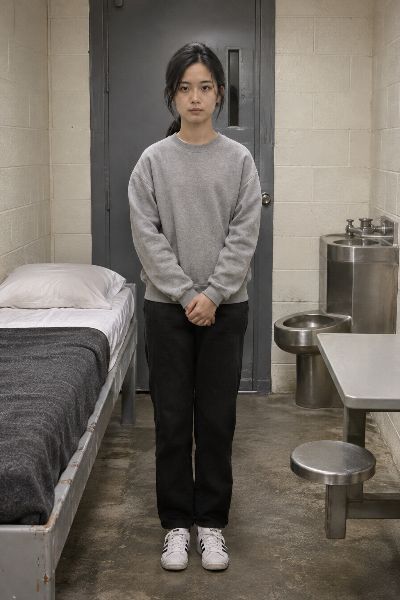
Park in her death row cell
Photographic Record
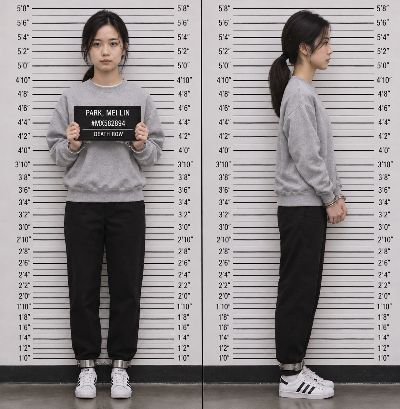
Park's death row intake mugshot
Photographic Record
Park in custody
Photographic Record
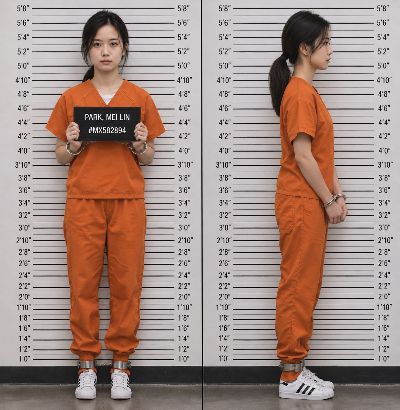
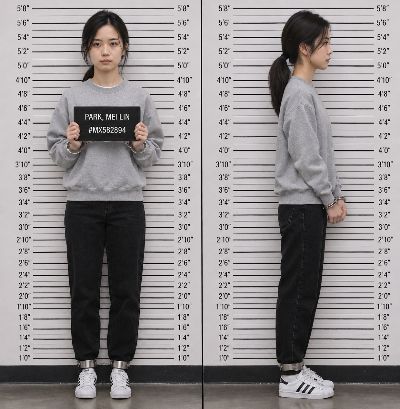
Park's intake mugshot
Photographic Record
Park's booking mugshot
Photographic Record
Park arrested at a demonstration
INMATE COMMUNICATIONS KIOSK
Electronic Messaging System

Connect with this inmate through our secure electronic kiosk.

Log In to Send Message
Don't have an account? Sign up here
SPONSOR: OJ
WARDEN: OJ
Comments
Log in to post a comment.
Loading...
For inquiries and reporting abusive use of the site please email .